
Meine Fahrten
Register a Ride with MUVN: The Path to Your First Match
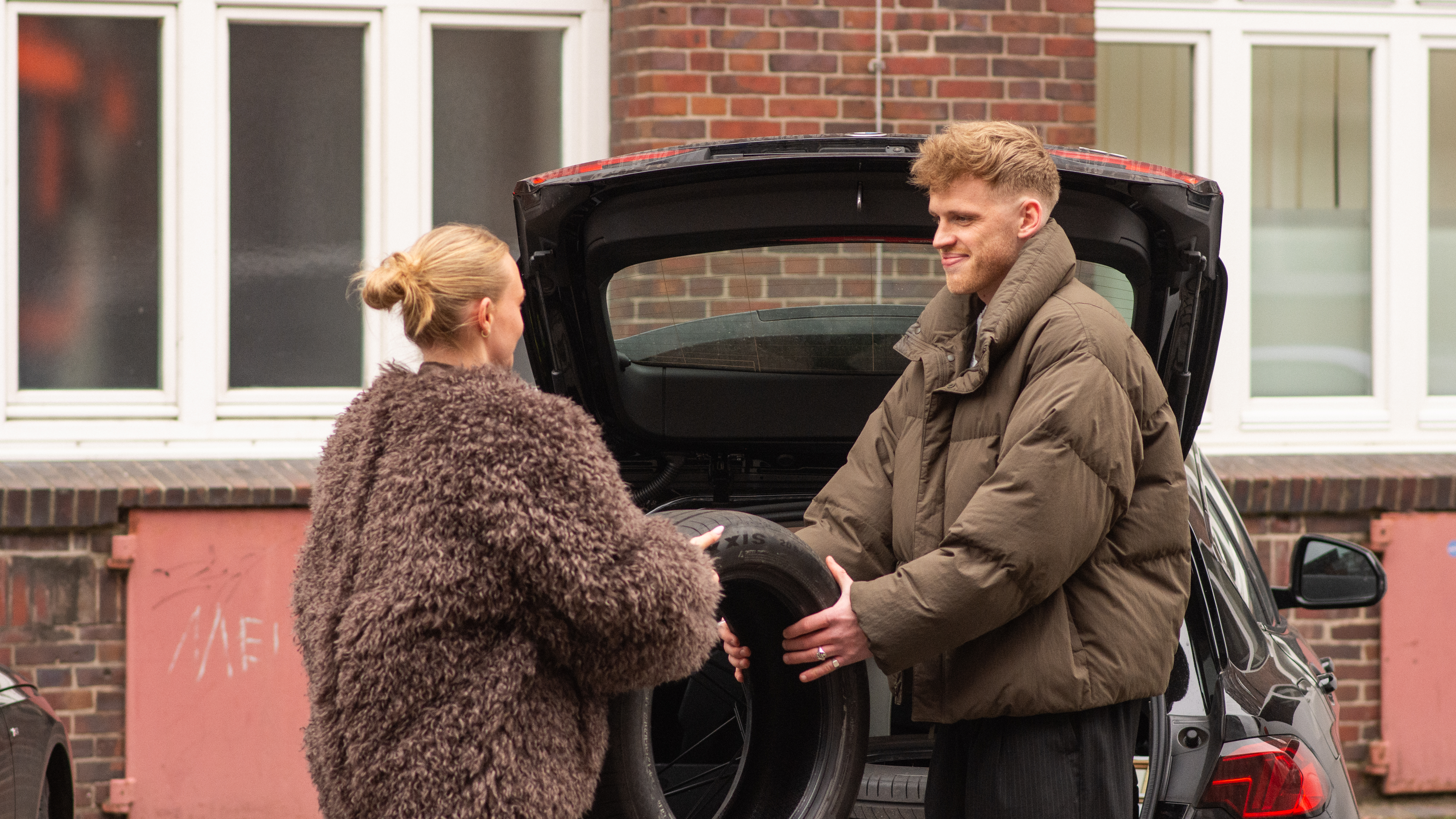
As of: September 2026
Registering a ride takes about two minutes and requires just four pieces of information: start, destination, time, and the detour you are willing to take for the transport. After that, you will see items that are along your route. You decide whether to accept a request. In this article, you will learn everything about the MUVN app, from registration to payout.
The Gap We're Addressing
Many people register, take a look around, and then do not enter a ride. Not because they changed their minds, but because it remains unclear what happens next. Do I register and then get assigned? Do I have to confirm? Can I cancel?
The short answer to all three questions: no, no, yes.
The longer answer is in this post..
Step 1: Profile and Verification
You register in the app or in the web app. For the driver role, verification with your driver's license and ID follows. This takes a few minutes once and is the reason why someone on the other side is loading a sofa into a stranger's car.
Think briefly from the perspective of the sender. They are giving away an item they just bought or can no longer transport. Verification is the point at which a stranger becomes someone you can trust with something.
Step 2: Enter the Ride
Four fields.
- Start. The address or location where you are departing.
- Destination. Where you are going.
- Time. Date and approximate time.
- Detour. How many kilometers you are willing to drive additionally.
The last field is the most important and is often underestimated. It controls which requests you will even receive.
If you enter zero kilometers, you will only see what is directly on your route. That means fewer requests, but without any effort. If you enter thirty, you open yourself up to pickups that are a bit off the beaten path. In practice, both variants are on the road, as well as drivers with a significantly larger radius.
Recurring Rides
If you regularly travel a route, such as to work or to family every other weekend, you can set it up as a recurring ride. Then you don’t have to enter it anew each time. For commuting routes, this is the difference between trying it once and being a regular.
Step 3: Requests Come In
You don’t have to wait for someone to request you. Most rides come about because drivers take the initiative: You see what is along your route and make an offer to the sender. If a request comes directly to you, you can, of course, respond to it.
Both paths end the same way: You agree, and the ride is arranged.
Step 4: The Price
At MUVN, there are no fixed prices. There is also no price table you can refer to. This is intentional. What a transport is worth depends on the route, size, effort, and timing. You know these four things better than any table.
Negotiations happen regularly. Almost one in five requests in September went through a counteroffer. This is not a sign that something is not working, but the normal way to arrive at a price that both sides agree on.
Step 5: Pickup and Delivery
You agree on a pickup time in the chat that both sides know. Communication takes place in eleven languages via the platform, so nothing gets lost over private numbers.
The payment is secured before transport. After delivery, it will be paid out. So you don’t have to pay upfront and don’t have to chase anyone down by phone.
The transport is generally insured, with basic coverage included and higher coverage available for purchase. The terms of the respective insurance conditions apply. The details can be found in the terms and conditions and insurance conditions at muvn.de/agb.
What Realistically Happens When You Register Today
The density varies from route to route. Currently, there is noticeably more activity on the axis between Berlin and the Rhineland.
Nevertheless, registering is the right action. The reason is structural. A marketplace becomes better for everyone when there are more offers on the same route. Every registered ride makes the next request more likely to be found. Those who get in early have little competition on their route.
The Three Reasons Why the First Ride Doesn’t Happen
We repeatedly see the same three points in support. All three are solvable.
The detour is set to zero. This means you only see what is practically on your lane. Five to ten kilometers significantly change the number of requests and hardly affect your travel time.
The ride is registered too last minute. Those who register on the morning of departure have not been involved in the search over the past few days. Requests that go online on Wednesday are looked at on Wednesday. Register earlier.
Waiting for a request instead of making one. The active side is currently the drivers. Look at what is along your route. Make an offer. That’s the quicker way.
What a Good First Message Contains
When you respond to a request, the first message matters a lot. Three things should be included.
- When you are driving. Specific details about your stated date.
- What you need to know about the item. Dimensions, weight, whether it is disassembled or not, whether someone will help with carrying.
- What you propose. An amount with a sentence of justification feels different than a number without context.
These are three lines. They save four messages back and forth. They make the difference between a request that fizzles out and one that leads to an appointment.
How This Differs from Other Methods
The difference with MUVN lies in the starting point. You do not search for a load and then plan a ride. You have a ride and see if something can come along. This may sound like a small detail, but it changes everything about it: pricing, commitment, and effort.
What Is Currently on the Move
What is being listed is more diverse than most expect. In recent days, among other things, there have been: a folding bike heading to Berlin, a car trunk cover, an oversized abstract painting, four chairs with rattan backs, a children's bicycle, a sofa made of full foam. Additionally, there are items that make you look twice: a metal spiral staircase, a small cart, two sledgehammers.
The common denominator is not size. It is distance. The average transport distance on the platform is 240 kilometers. This is exactly the range where a parcel service no longer applies and a freight forwarder does not make sense for a single piece.
If you regularly travel such a distance, you are the right solution for this area, as you are already on the road.
Frequently Asked Questions
Can I decline a request?
Yes, anytime before confirmation. A registered ride is not a confirmation, but visibility.
What if my ride changes?
You change the time in the app. If an agreement is already in place, you discuss it in the chat. Changes are the most common case and are not a problem as long as they are communicated early.
Do I have to help with loading?
You clarify this beforehand. For bulky items, the question belongs in the first message, not at the curb.
How many rides do I have to do at a minimum?
None. There is no minimum number, no commitment, and no subscription.
What does it cost to register a ride?
Registering a ride is free.
Can I take multiple items on one ride?
Yes, as long as they fit in your vehicle and the pickup locations work for you. Multiple small items on one route occur regularly.
Conclusion
The path from registration to your first transport consists of four pieces of information and one decision. Everything in between is up to you.
If you are traveling a longer distance in the coming weeks: Register it before you leave.